
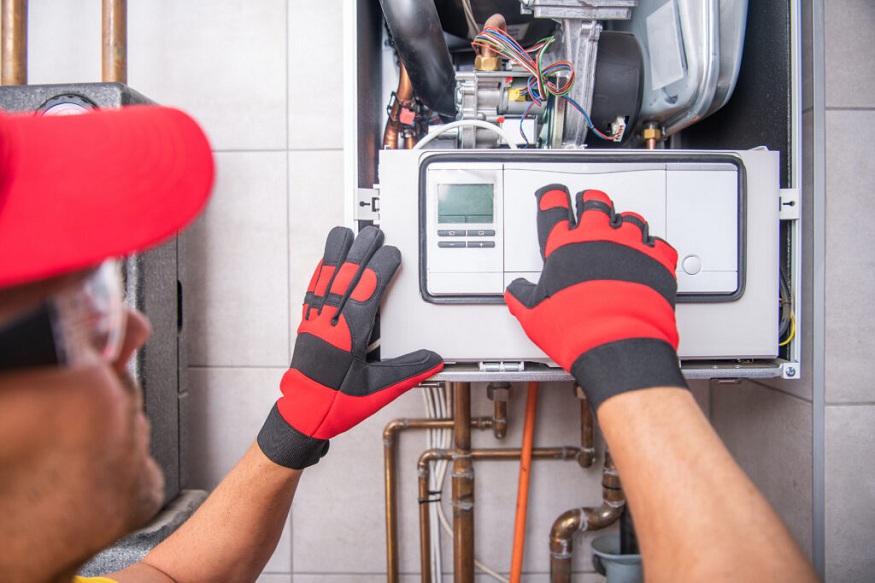
Modern furnaces are basically digital equipment. That means the traditional way of just feeling the temperature as a measure of functionality is no longer viable. A furnace can be restored, and still leave you wondering whether the job was genuinely finished. The house feels warmer, the technician packs up, and everything appears normal. But good heating service is not really about seeing a flame or hearing the blower start. It is about knowing whether the system is operating as it should, and whether the repair has left the equipment ready for the demands placed on it.
1. Combustion and Safety Checks Are Not Optional Extras
With a gas furnace, getting heat back is only part of the job. The system also needs to burn and exhaust fuel safely to avoid underperformance and risks of poisoning.
That’s why Red Deer Furnace Repair professionals must evaluate combustion and venting performance after undertaking furnace repairs on burners, gas controls, ignition, venting or other combustion-related components. Alberta maintains specific gas codes and standards governing gas-fired appliances and equipment.
A professional may therefore verify conditions such as:
- Gas pressure against manufacturer requirements;
- Combustion and venting performance;
- Appropriate draft or exhaust operation where applicable;
- Carbon-monoxide conditions;
- Proper operation of safety controls.
There is no single universal “good CO number” that should replace proper testing and manufacturer requirements. For homeowners, the bigger point is simple: every restoration must meet safe operation standards, not judged solely by whether it produces warm air. Alberta Health Services also recommends annual heating-system inspections and properly installed CO detectors.
2. Efficiency Is More Than the Number on the Furnace
A furnace advertised at 95% or 98% AFUE does not automatically operate at that level in every real-world situation. That rating describes the equipment under standardized conditions; the condition of the installation and the quality of the repair still matter.
After service, a knowledgeable technician should look at whether the furnace is actually operating within its manufacturer’s requirements.
That can include checking:
- Temperature rise between return and supply air
- Burner and heat-exchanger condition
- Combustion performance
- Gas pressure and appliance operation
- Whether airflow is adequate for the system.
For you as a homeowner, the useful question is not simply, “What efficiency does my furnace have?” It is, “Is the repaired system operating properly for the equipment I own?”That difference separates a proper service assessment from simply getting the furnace to start again.
Read More: Why Contractors Are Choosing Waterproof Industrial Power Stations for Reliable Job Site Power
3. Airflow Can Quietly Decide Whether the Repair Performs
Imagine the furnace is repaired perfectly, but the filter is highly restrictive, the return-air path is undersized or the ductwork is creating excessive resistance. The appliance may still struggle to deliver heat comfortably throughout the house.
This is why airflow deserves attention after significant furnace work.
A technician may evaluate:
- Static pressure across the system
- Blower operation
- Filter resistance
- Return- and supply-air conditions
- Temperature rise.
There is no universal number that should automatically be applied to every furnace. The manufacturer’s specifications and the actual equipment configuration matter.
Blindly chasing a particular CFM or pressure reading can be just as misleading as ignoring airflow altogether. Good workmanship means finding out where the airflow problem actually is instead of simply increasing blower speed and hoping for the best.
4. Electrical and Control Performance Can Reveal the Repair’s Quality
Modern furnaces can seem to work normally, but failing in critical aspects. For example, your system may be responding to your input commands, but quietly consuming excess energy or developing intermittent faults. Because they rely on microprocessors, sensors and ECM motors, visual inspection alone is no longer enough. After a repair, a skilled technician should verify performance through diagnostic measurements.
This is where competent diagnosis becomes valuable.Rather than relying on a generic checklist, the technician should undertake tests that show stable, safe operation within the equipment manufacturer’s specifications. Depending on the furnace, that could include:
- Blower-motor current
- Flame-sensing performance
- Ignition sequence
- Thermostat communication
- Safety-switch operation
- Diagnostic or fault codes.
The important thing is interpretation. A particular microamp reading, amp draw or pressure value should not be treated as a universal pass/fail threshold across every furnace model.You want the technician to explain what was measured, what the manufacturer expects, and whether anything remains outside that range.
Read More: Designing for Attention: How Physical Spaces Influence Consumer Behaviour
In essence, a quality furnace repair should leave you with more than heat—it should leave you with confidence in the system’s condition. The strongest technicians measure, interpret and explain rather than simply replace parts. For a Red Deer homeowner, that level of workmanship is especially valuable because winter exposes weak repairs very quickly.